

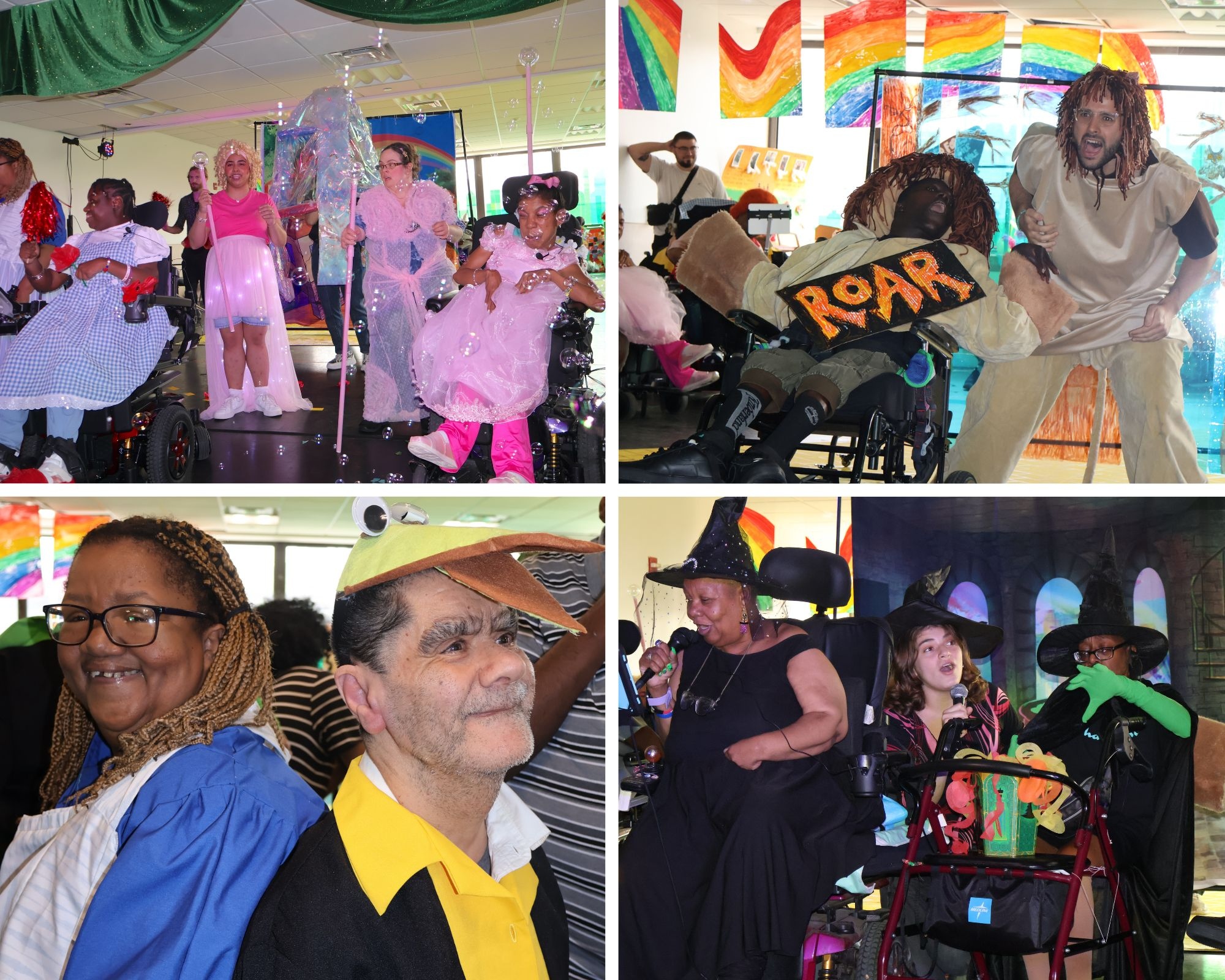
This summer, ADAPT’s Theater Group transformed our 5030 Broadway Day Habilitation Program into the magical realm of Oz in their latest original production, Journey Through Oz, the Musical. Inspired by The Wizard of Oz, this vibrant and colorful production followed the characters Dorothy, Elphaba, and Toto on a fun and surprising adventure down the Yellow Brick Road.
Journey Through Oz featured an original script written by our own Day Habilitation participant, Donald Alexander, with the support of his editor and Art Specialist Natalie Reichel. Working alongside the people we support on the WACN channel, they brought Donald’s story to life in script form. Written through the lens of disability, it celebrates individuality, empowerment, friendship, and joy. Across three stellar performances, audience members got to sing, dance, and celebrate alongside a cast of 30 talented actors.
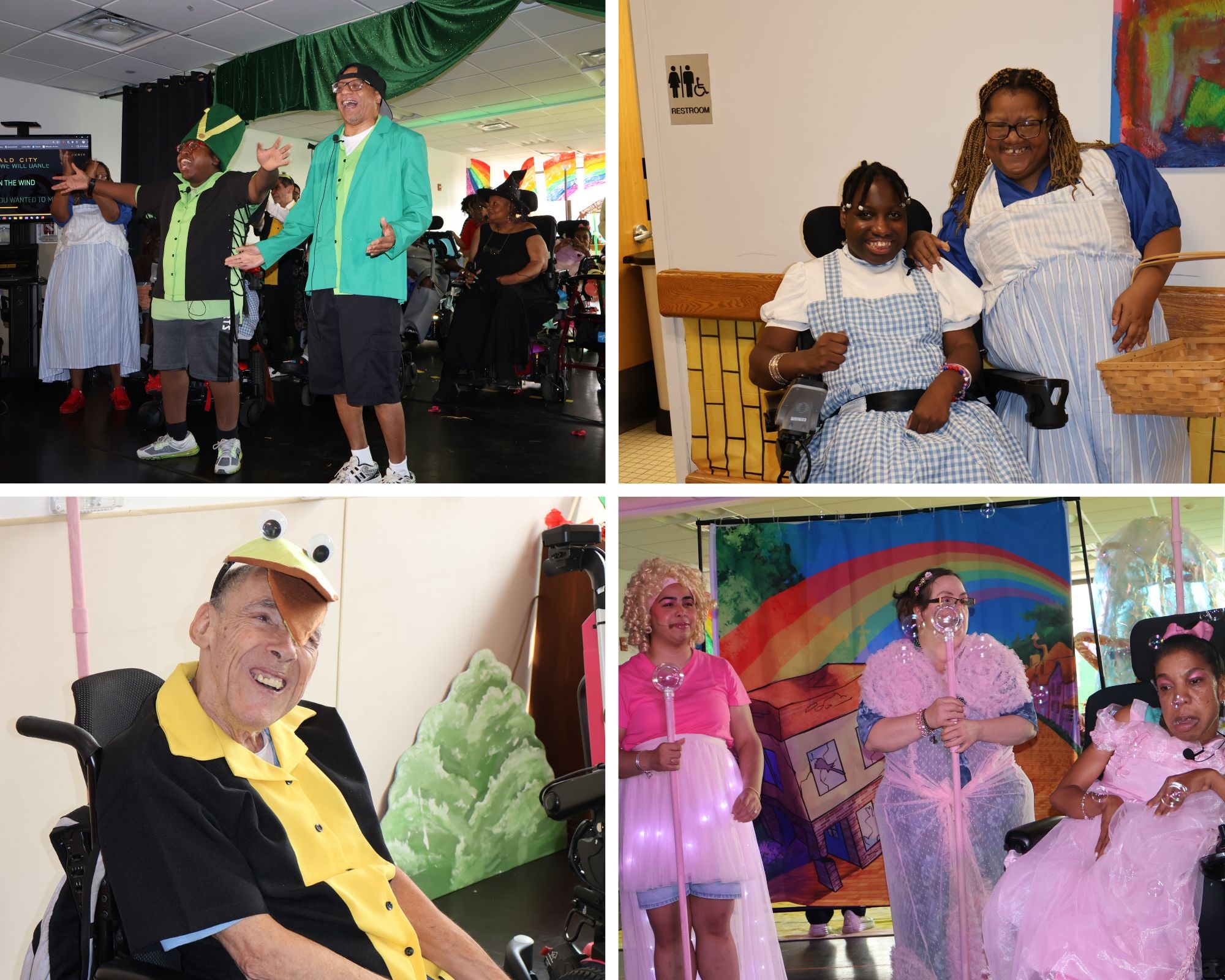
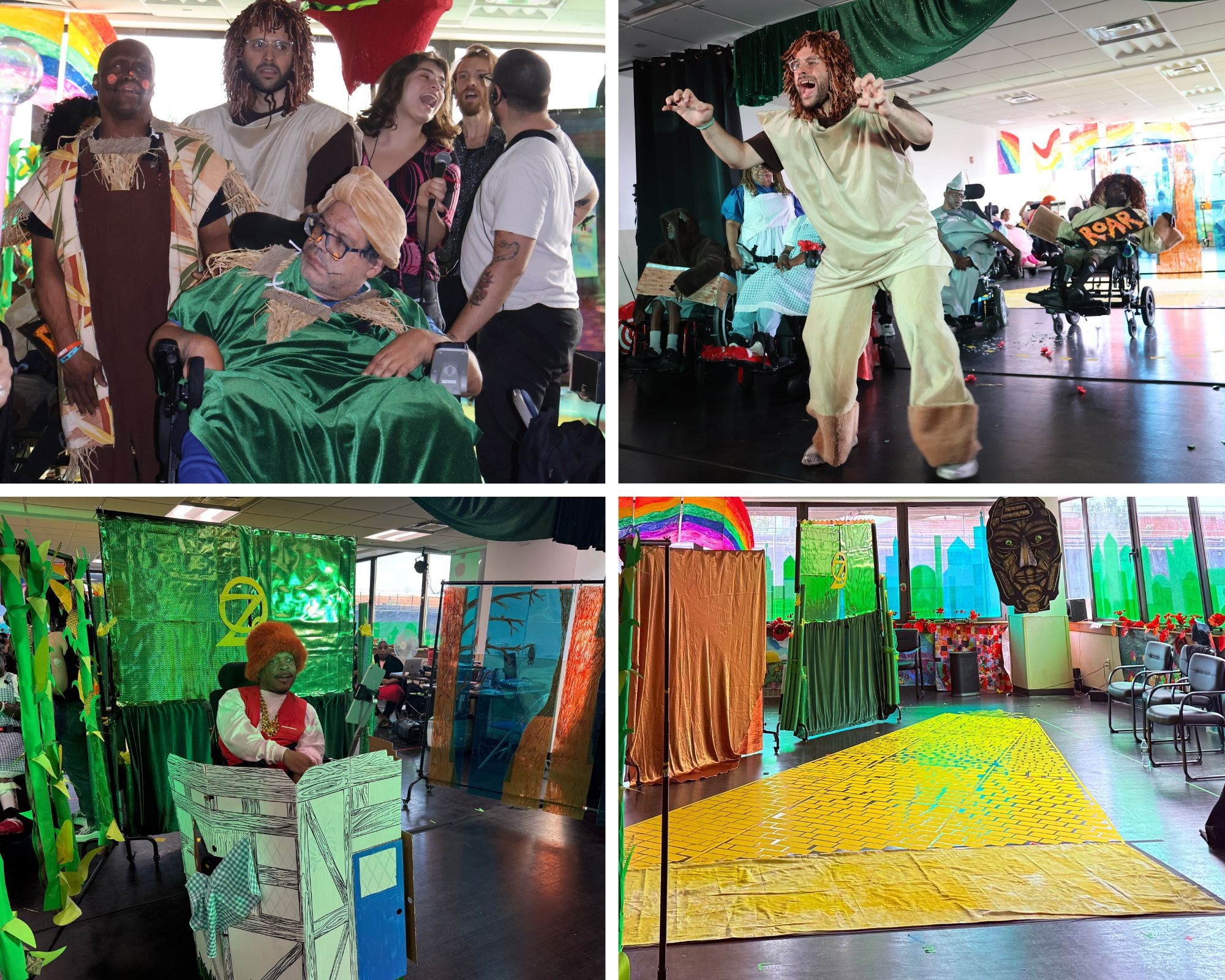
Creating the magic of Oz took more than what the audience saw on stage. Behind the scenes, people supported and staff worked together to create many of the details that brought the production to life. Art Specialists Debora Martinez and Sahir Pena were at the forefront of costume design, creating many of them from scratch. The production even had a volunteer, Brett, drive down from Kansas (just like Dorothy herself) to contribute his expertise in puppetry, sewing, performance, and stagecraft.
“We are so lucky and grateful that Brett was able to come sprinkle his fairy dust all over Oz”, shared Director and Theatre Specialist Hunter Kaufer.
Set design was another important part of transforming the 5030 Day Hab Program into Oz. With the help of 5030 Broadway staff, different parts of the set were built to create the Yellow Brick Road and other pieces throughout production. What was once an ordinary space became another world, covering the walls of the Day Hab with Oz scenery.
The magic of Journey Through Oz also extended beyond acting. Leading up to the final performances, the ADAPT Theatre Group explored the different ways technology could help make the process of performing more accessible for the actors themselves. To help tackle these obstacles, they partnered with Cornell Tech’s MakerLab.
ADAPT Theatre Specialists and actors worked alongside two groups of senior engineering students from Cornell University to help identify access barriers that arise in the rehearsal and performance process. One of those barriers was finding ways to help actors know where to be, what to say, and when to move forward in the script when rehearsing or performing. By better understanding these barriers, students were able to explore how technology could create theatre-specific solutions using digital design, coding, and 3-D printing, taking this summer’s musical to the next level with the creation of the ADAPT Stage Prompter.
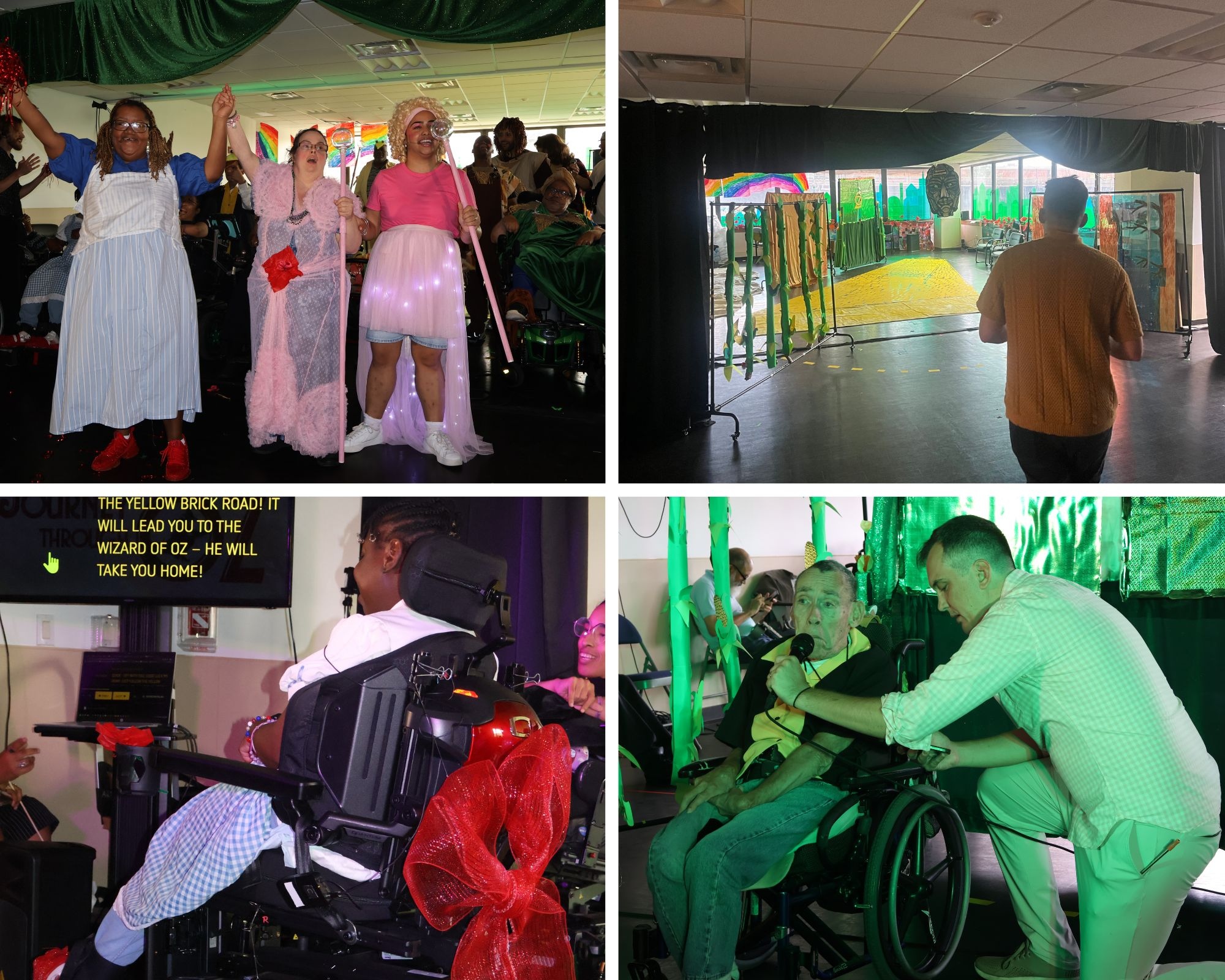
Another Cornell Tech student, Yu Zhang, and her team created a private web server that allows actors to access the same page of the script simultaneously on their own devices. Hunter shares that throughout the development process, Yu worked closely to make the technology more responsive to the actor’s needs, making adjustments that would allow actors to easily navigate between scenes and smoothly scroll through the script one line at a time. The team also incorporated options for text size, color, and scrolling sensitivity, as well as original artwork created by ADAPT artists.
“This is something that allowed our actors the independence of not having to have the words whispered to them and being able to take the story into their own hands” Hunter shared. “It takes a big part of the nervousness out. Actors are able to enjoy themselves more throughout the play.”
For several months, the tool helped make the theatre experience more accessible, allowing actors to stay connected to the story and one another. After the project, Yu was inspired to stay on with ADAPT as a part of ADAPT’s Volunteer Program.
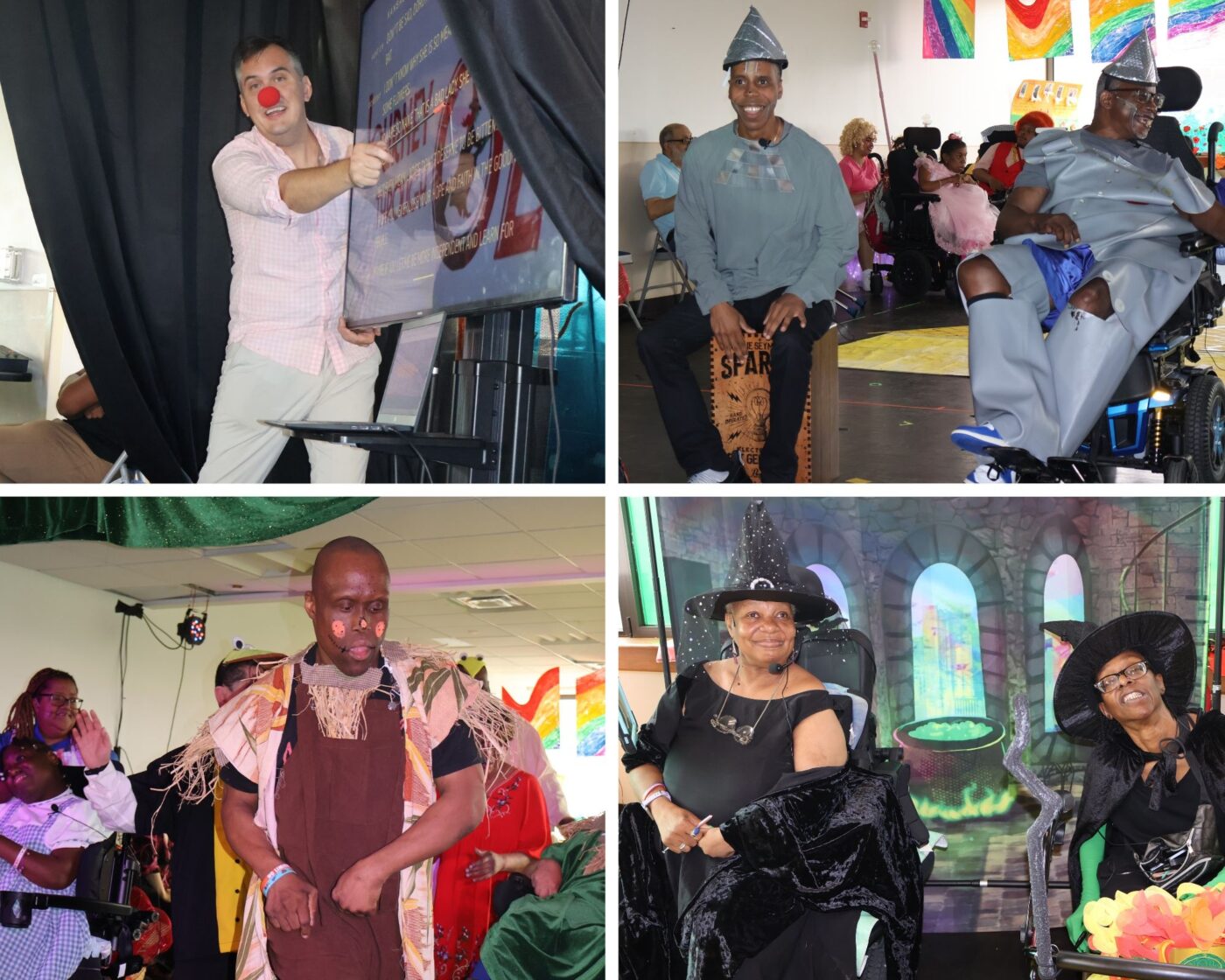
In many ways, Journey Through Oz was about finding your way home and discovering that there is more than one path to get there. The production reflected that message not only through its story, but through the way it was created. And perhaps the greatest magic of all was creating space where every actor could share their talents and shine on stage.
“There was something so special about this musical” shared Hunter, “Every performer had a moment where they absolutely shined, and saw what was magical about them.”
Photography Credit: ADAPT Specialist Alisha Wedemier