
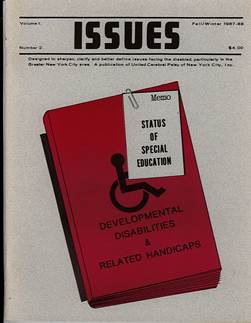
In 1975, United Cerebral Palsy brought forward a class action lawsuit against the Board of Education for failing to comply with federal mandates concerning the education rights of children with disabilities. This lawsuit led to negotiations that established the City’s Board of Education’s obligations under the Architectural Barrier Removal (ABR) program and created the Education for All Handicapped Children (EHA) Act, guaranteeing children with disabilities the right to a public education.
In the 90’s, the name changed to what it is known as today, the Individuals with Disabilities Education (IDEA) Act, marking a shift towards strengthening the foundational impact of accessibility.
The IDEA Act is a federal law that guarantees children with disabilities the right to attend public schools. This means that a student with disabilities has the right to learn alongside their peers and receive an education tailored to their individual needs. However, although the City committed to making school buildings, services, and special education sites accessible under a December 1984 stipulation, progress was stagnant.
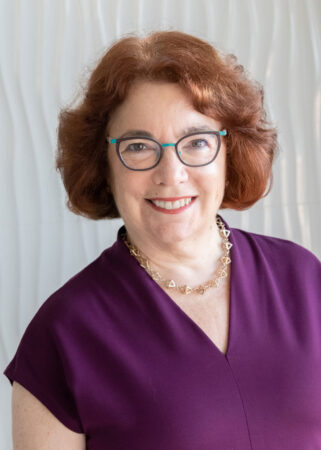
ADAPT’s Chief Administrative Officer, Roberta Koenigsberg, took charge ensuring the vision behind the IDEA Act was successfully and properly implemented.
Reflecting on the past 50 years, Roberta shares the impact of the IDEA Act for children with disabilities and the ongoing fight for accessible public schools in New York City.
“There were so many requirements in federal law, but the NYC school system couldn’t implement them,” Roberta shares.
Many schools remained inaccessible, forcing students to attend schools outside their district or limiting their access to school activities. Roberta recalls visiting schools to observe the work being done in efforts to ensure the City was complying. “With many of the schools being close to 50 years old, it was a very laborious process.”
For Roberta, the work she was contributing to was about “helping a huge school system implement federal requirements so there could be a meaningful way to have education.” She placed change at the center of the fight. At the same time, United Cerebral Pasly was engaging in groundbreaking social change by bringing forward litigation to demonstrate the seriousness of the situation.
“A lot of agencies at the time weren’t doing that” Roberta adds. “That really changed the landscape. UCP did it because they saw it as a problem that was affecting people with disabilities across all agencies and schools.”
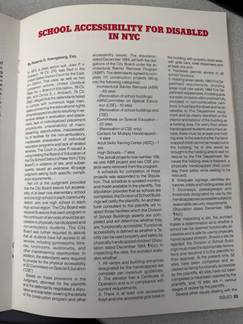
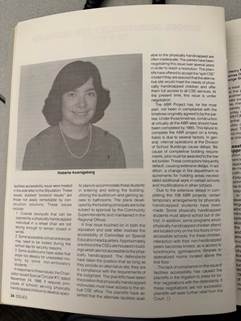
Not only did Roberta’s article document the gap between IDEA’s guarantees and real-world conditions in NYC schools, but it also made this gap visible.
“When you think about 50 years ago, a principal could say ‘I don’t want to serve your kid’” Roberta reflects. “The activism from parents and advocates in the community is what led to the IDEA Act, which led to accessibility. We can’t be complacent. We can’t say this is just routine. We have to keep an eye on the message that all of these services are important. When times get tough, you don’t want somebody to pull them back. We have to stay vigilant, and we have to continue to advocate so these services do not dissipate.”
Building on decades of advocacy, ADAPT Community Network continues this work by advancing inclusive education through our programs and services.